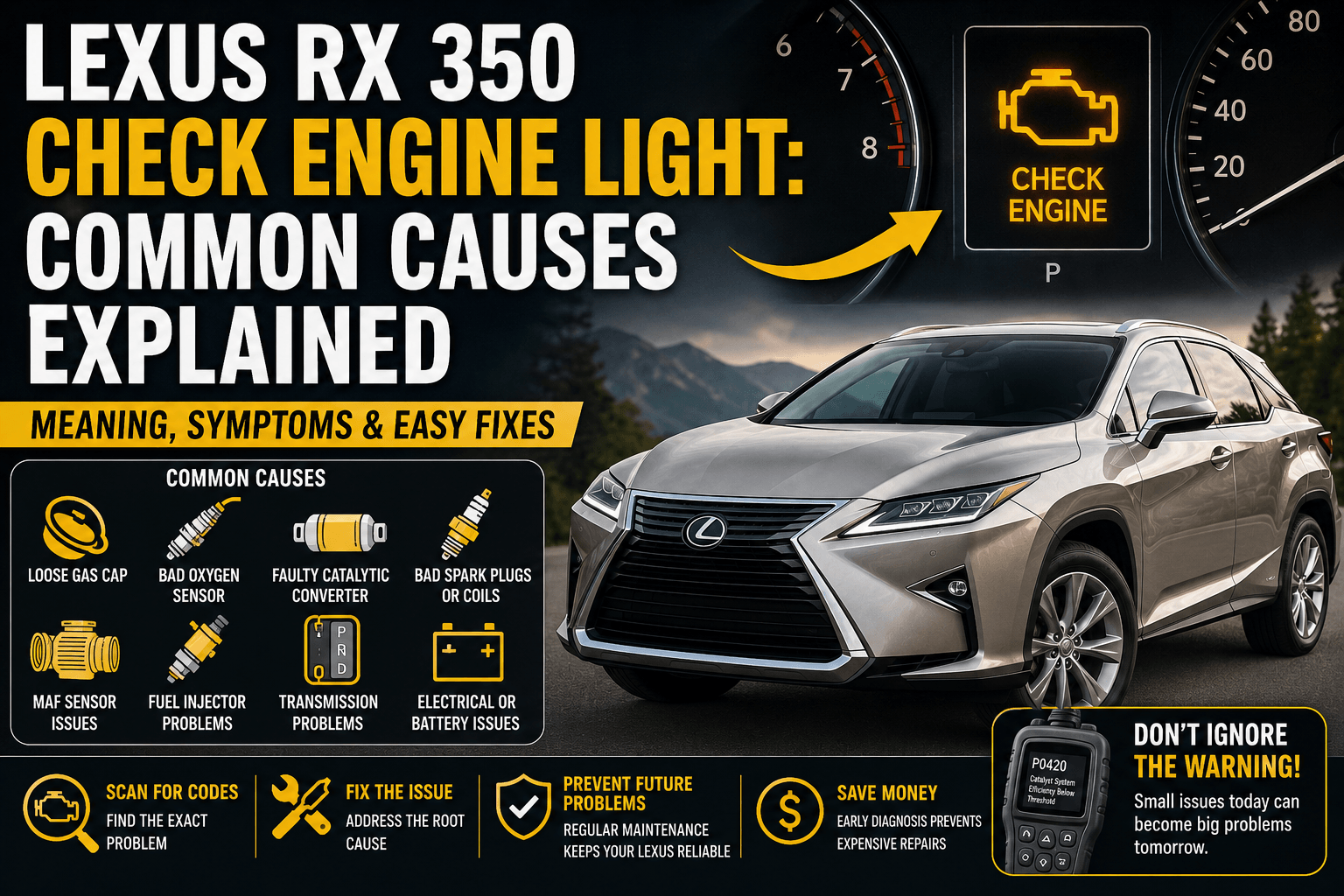
When the Lexus RX 350 check engine light appears on your dashboard, it can create confusion and concern. Sometimes, your SUV may continue driving normally without any noticeable problem. Other times, the warning light may appear with poor performance, strange noises, shaking, or reduced power.
The check engine light is part of your Lexus RX 350 onboard diagnostic system. This system constantly monitors important components, including the engine, transmission, fuel system, ignition system, and emissions equipment.
When the computer detects something unusual, it stores a trouble code and turns on the check engine warning light.
Although the light does not always mean you have a serious engine failure, you should never ignore it. A small issue like a loose gas cap can trigger the warning, but bigger problems like a failing catalytic converter or engine misfire can also cause it.
Understanding the common Lexus RX 350 check engine light causes can help you know what to check, how serious the problem is, and when you need professional repairs.
What Does the Check Engine Light Mean on a Lexus RX 350?
The check engine light means your Lexus RX 350 engine control system has detected a problem that needs attention.
Your vehicle uses sensors throughout the engine and exhaust system. These sensors send information to the engine control module. If the readings fall outside normal limits, the system activates the warning light.
However, the meaning depends on how the light appears.
Solid Check Engine Light
A solid check engine light usually means the problem is less urgent.
Your Lexus may still drive normally, but you should diagnose the issue soon.
Common causes include:
- Loose gas cap
- Oxygen sensor failure
- Minor emissions problem
- Sensor malfunction
Although the vehicle may feel fine, delaying repairs can allow small issues to become expensive problems.
Flashing Check Engine Light
A flashing check engine light on a Lexus RX 350 usually indicates a more serious problem.
Most commonly, it points to an engine misfire.
When the engine misfires, unburned fuel can enter the exhaust system and damage expensive components like the catalytic converter.
If your Lexus RX 350 check engine light is flashing, reduce driving and inspect the vehicle immediately.
Common Causes of Lexus RX 350 Check Engine Light
Several problems can activate the check engine light. Some repairs are simple, while others require professional diagnosis.
Below are the most common reasons.
Loose or Damaged Gas Cap
A loose gas cap is one of the simplest reasons your Lexus RX 350 check engine light may come on.
The fuel system is designed to stay sealed. The gas cap helps maintain pressure and prevents fuel vapors from escaping.
When the cap becomes loose, damaged, or missing, the vehicle detects a leak in the evaporative emissions system.
Symptoms of a Loose Gas Cap
You may notice:
- Check engine light after refueling
- Fuel smell around vehicle
- No performance problems
- EVAP system error code
How to Fix It
First, remove and tighten the gas cap until it clicks.
After several driving cycles, the check engine light may turn off automatically.
However, if the cap is cracked or worn, replacing it is usually inexpensive.
Bad Oxygen Sensor
A faulty oxygen sensor is another common Lexus RX 350 check engine light cause.
The oxygen sensor measures oxygen levels in the exhaust gases. Your Lexus computer uses this information to adjust the air and fuel mixture.
When the sensor fails, the engine may use too much or too little fuel.
Signs of a Bad Oxygen Sensor
Common symptoms include:
- Check engine light
- Poor fuel economy
- Rough idle
- Failed emissions test
- Reduced engine performance
How to Fix It
A diagnostic scanner can identify which oxygen sensor has failed.
Replacing the bad sensor usually restores proper engine performance and fuel efficiency.
Faulty Catalytic Converter
The catalytic converter helps reduce harmful exhaust emissions.
Although Lexus vehicles are known for reliability, catalytic converter problems can happen after many miles.
A failing catalytic converter can trigger the check engine light because exhaust readings become abnormal.
Symptoms of Catalytic Converter Problems
Signs include:
- Poor acceleration
- Rotten egg smell from exhaust
- Reduced fuel economy
- Engine overheating
- Failed emissions inspection
How to Fix It
First, diagnose other engine problems because bad spark plugs or misfires can damage the catalytic converter.
If the converter itself has failed, replacement may be necessary.
Bad Spark Plugs or Ignition Coils
Your Lexus RX 350 engine depends on spark plugs and ignition coils to ignite the air and fuel mixture.
When these parts fail, the engine may misfire.
A misfire is one of the most important check engine light problems because ignoring it can cause additional damage.
Symptoms Include:
- Flashing check engine light
- Engine shaking
- Rough idle
- Poor acceleration
- Higher fuel consumption
How to Fix It
Replace worn spark plugs based on your Lexus maintenance schedule.
If an ignition coil fails, replacing the faulty coil can restore smooth engine operation.
Faulty Mass Air Flow Sensor
The mass air flow sensor measures how much air enters your engine.
Your Lexus RX 350 uses this information to deliver the correct amount of fuel.
When the sensor provides incorrect readings, the engine may struggle.
Symptoms of MAF Sensor Failure
You may experience:
- Check engine warning
- Hard starting
- Rough idle
- Poor acceleration
- Engine hesitation
How to Fix It
Sometimes cleaning the sensor solves the issue.
However, if the sensor is damaged, replacement may be required.
Transmission Problems
Many drivers assume the check engine light only relates to engine problems. However, transmission issues can also activate the warning.
Your Lexus RX 350 transmission communicates with the vehicle computer.
If the system detects abnormal shifting or sensor problems, it may trigger a warning.
Signs of Transmission-Related Check Engine Light
Symptoms include:
- Hard shifting
- Delayed gear changes
- Jerking while accelerating
- Transmission slipping
Transmission issues should be inspected quickly to prevent expensive repairs.
Weak Battery or Electrical Issues
Modern Lexus vehicles depend heavily on electronics.
A weak battery, voltage issue, or electrical fault can sometimes trigger warning lights.
Signs Include:
- Multiple dashboard warnings
- Starting problems
- Random electrical issues
- Dim lights
Testing the battery and charging system can confirm the problem.
Bad Fuel Injectors
Fuel injectors deliver fuel into the engine.
When they become dirty or damaged, your Lexus RX 350 may not receive the correct amount of fuel.
Symptoms Include:
- Rough idle
- Engine hesitation
- Poor gas mileage
- Check engine light
Cleaning or replacing faulty injectors can fix the issue.
Can You Drive a Lexus RX 350 With the Check Engine Light On?
It depends on the situation.
If the check engine light stays solid and your Lexus drives normally, you can usually continue driving temporarily.
However, schedule a diagnosis soon.
Avoid driving if you notice:
- Flashing check engine light
- Strong shaking
- Burning smell
- Loss of power
- Loud engine noises
- Overheating
Continuing to drive with serious problems can increase repair costs.
How To Reset Lexus RX 350 Check Engine Light
There are several ways to reset the warning light.
Use an OBD2 Scanner
The best method is using an OBD2 diagnostic scanner.
This tool reads the stored trouble codes and can clear the warning after repairs.
Disconnecting the Battery
Some people disconnect the battery to reset the light.
However, this does not fix the actual problem.
If the issue remains, the check engine light will return.
Lexus RX 350 Check Engine Light Repair Cost
Repair costs depend on the cause.
Estimated costs:
Gas cap replacement: $20–$50
Oxygen sensor replacement: $150–$500
Spark plugs replacement: $200–$500
Ignition coil replacement: $150–$400
Mass air flow sensor replacement: $200–$600
Catalytic converter replacement: $1,000–$3,000+
Prices vary depending on location, labor rates, and model year.
How To Prevent Lexus RX 350 Check Engine Light Problems
Proper maintenance reduces the chance of unexpected warning lights.
Helpful tips include:
- Follow Lexus maintenance schedules
- Replace spark plugs on time
- Use quality fuel
- Fix small problems early
- Change dirty filters
- Inspect the battery regularly
- Avoid ignoring unusual symptoms
Preventive care keeps your Lexus RX 350 reliable and helps avoid expensive repairs.
Frequently Asked Questions
Why is my Lexus RX 350 check engine light on?
Your Lexus RX 350 check engine light may appear because of a loose gas cap, faulty oxygen sensor, bad spark plugs, ignition coil problems, catalytic converter issues, or sensor failures.
Why is my Lexus RX 350 check engine light flashing?
A flashing check engine light usually means an engine misfire. You should inspect the vehicle quickly because misfires can damage the catalytic converter.
Can low oil cause the Lexus RX 350 check engine light?
Low oil usually activates an oil warning light, but engine problems caused by low oil may trigger the check engine system.
Will the Lexus RX 350 check engine light turn off by itself?
Yes, it may turn off if the problem disappears. For example, tightening a loose gas cap may clear the warning after several trips.
How do I find the exact reason for my Lexus RX 350 check engine light?
The best method is scanning the vehicle with an OBD2 scanner. The stored trouble code helps identify the affected system.
Conclusion
The Lexus RX 350 check engine light can appear for many reasons, from simple problems like a loose gas cap to serious issues like engine misfires or catalytic converter failure.
Although your Lexus may continue driving normally, diagnosing the cause early can prevent expensive repairs. Start with basic checks, scan for trouble codes, and repair the actual problem before resetting the warning light.
With proper maintenance and quick attention to warning signs, your Lexus RX 350 can continue providing the reliability and smooth performance it is known for.